Everybody loves big themes – but in film music, chords & harmony do the real work
When people talk about film music, they usually talk about themes. They hum melodies, remember opening titles, associate films with iconic musical ideas. And that makes perfect sense. Melodies are easy to remember. They give shape to memory. They feel like the music. But when it comes to how film music actually works – emotionally, narratively, psychologically – melodies are often not where the real work happens. Most films are not carried by themes. They are carried by harmony. Let's find out why chords, tonal ambiguity, and evolving textures often shape emotion long before melody enters.
The audience’s love for melodies
Melody is what we consciously notice. It is singable, recognizable, repeatable. A melody feels like a message – something we can point to and say: this is the music of this film. That is why melodies dominate the way audiences talk about film music. And it is also why many directors initially ask for “a theme”, even in scenes where a theme would be the worst possible choice. This is not an argument against themes – it is an argument for understanding where they actually belong.
The issue is not that melodies are overrated. The issue is that memory and function are not the same thing. A melody is easy to remember. But emotional function often happens long before anything becomes memorable – that’s just the human nature.
Think of quiet dialogue scenes. Transitional moments. Scenes where something slowly dawns on a character. Scenes that are emotionally open, unresolved, ambiguous. In those moments, a melody would already be a statement. And more often than not, the film does not want a statement yet. There are countless scenes in which no one remembers a melody afterwards – and yet the scene would fall apart emotionally without the music. Not because something is being “played”, but because something is being held.
Example
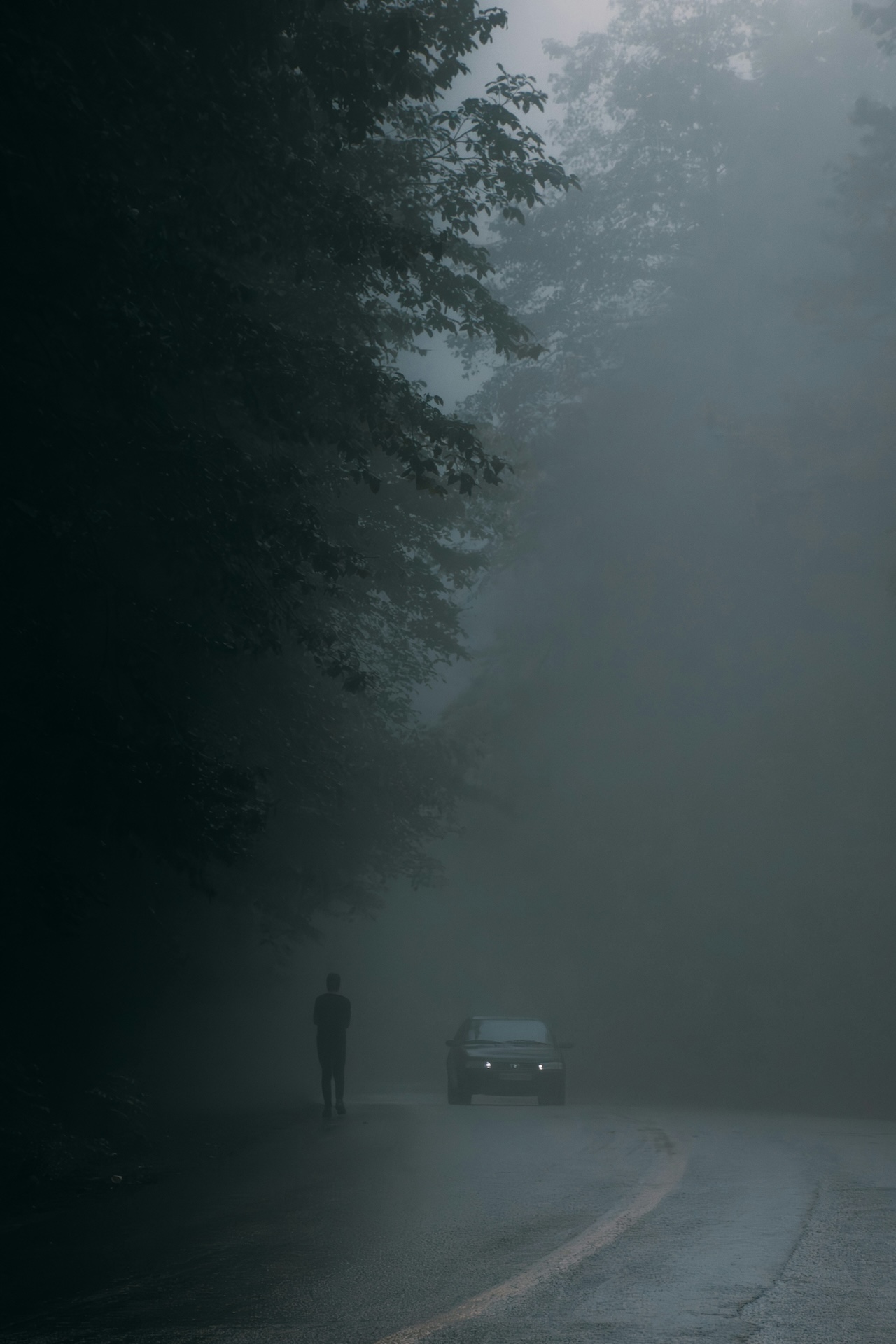
A helpful way to understand this shift is through two director–composer pairings that mark different stages of the same development. With Angelo Badalamenti and David Lynch, texture became a narrative force in its own right: harmony slowed down, melodies dissolved, and music created emotional space rather than direction. Decades later, the collaboration between Jóhann Jóhannsson and Denis Villeneuve shows the same idea fully integrated into mainstream cinema – most notably in Arrival. The score is not melodically empty, but what audiences remember is not a theme they can hum, but a harmonic and textural continuum that quietly carries the film’s emotional weight.
The composer’s reality
From the outside, it may look like composers sit down and invent themes. In reality, composers spend much more time deciding what not to write.
Good film music – especially underscore – often has a tendency to be “boring”. That is not a flaw. It is a survival strategy. Film music can easily become too much. Every beginner knows that. Or learns it the hard way, when the director is forced to say it out loud. Most scenes do not want musical attention. They want musical support.
From a compositional point of view, this means starting with restraint: limited movement, limited harmonic information, limited emotional coding. Not because the composer lacks ideas, but because the film needs space. This kind of restraint is rarely a unilateral decision – it emerges from a shared understanding of what the film already provides.
From a directing point of view, this restraint often goes unnoticed – until it is gone. Then the scene suddenly feels pushed, commented on, emotionally over-explained. As a director, you may still ask for a theme – but this explains why it often arrives late.
This is the everyday reality of film composition: not writing what would sound interesting on its own, but what allows the film to breathe in combination.
Example
A revealing example of this restraint is the collaboration between Howard Shore and David Fincher in Panic Room. Despite Shore’s strong thematic voice in other works, the score enters late and remains largely unobtrusive, relying on harmonic tension rather than melody. Most of the film’s suspense is carried by space, movement, editing, and sound design – the music knows the film already works. This is the composer’s reality: not adding emotion, but carefully deciding when music is finally allowed to exist at all.

Harmony as emotional architecture
Harmony works differently from melody. A melody draws attention. Harmony shapes expectation.
Harmony creates a field in which emotion can happen. It defines whether something feels stable or unstable, open or closed, safe or threatening – often without the audience consciously noticing any musical event at all.
That is why harmony usually comes first. Before a melody enters, the emotional ground has already been prepared by chords, by sustained tones, by slow harmonic shifts or deliberate lack of movement. Directors often feel this before they can name it: a scene suddenly has weight, even though nothing “happens” musically.
This is also why film music is very often tonal – but rarely unambiguous. “Tonal” simply means that the music has a center, a gravitational pull. The listener knows where “home” is. “Unambiguous” would mean that this center carries a clear emotional meaning.
Film music usually avoids that clarity. A tonal center without emotional certainty creates orientation without instruction. The audience feels grounded, but not told how to feel. This is crucial in scenes that deal with moral uncertainty, inner conflict, or emotional transition. Harmony, in this sense, is not decoration. It is emotional architecture.
Example
A clear example of harmony functioning as emotional architecture can be found in the collaboration between John Williams and Steven Spielberg in Close Encounters of the Third Kind. A rare exception in the often very thematic work of John Williams. Long before any recognizable theme appears, the score establishes harmonic centers that act like gravitational fields, shaping expectation rather than emotion itself. The music does not move the audience forward – it places them inside a space of curiosity and suspension. When melody finally enters, it works precisely because the harmonic architecture has already been built.

Why simplicity is often a strength
One of the most misunderstood aspects of film music harmony is simplicity. Many powerful scores rely on very little harmonic movement. Sometimes on a single chord. Sometimes on a constant bass note with subtle changes above it. This technique is often described as harmonic stasis – a lack of progression. In simple terms: the harmony does not “go anywhere”.
But emotionally, this can be incredibly effective. A sustained harmony creates tension through expectation. The listener waits for something to happen. The film fills that waiting space with performance, image, narrative. A common tool here is the pedal tone: a single note that stays constant while everything else slowly shifts around it. Even listeners without musical training perceive this as unstable, suspended, unresolved. This kind of simplicity works particularly well in scenes of waiting, observing, suppressed conflict, or unspoken emotion. The music does not comment – it holds. What may feel uneventful from a musical perspective is often exactly what the scene needs.
Example
A clear example of why simplicity can be a strength is the collaboration between Brian Reitzell and Sofia Coppola in Lost in Translation. The score relies on extremely reduced harmonic material, often hovering around a few chords without clear progression. Nothing in the music pushes the emotion forward – it simply holds space for what remains unspoken. In doing so, simplicity becomes not a limitation, but a form of respect for the film.

The danger of harmonic overstatement
If harmony shapes emotion, it can also over-shape it. Too much harmonic movement, too many emotional cues, too clear a progression can turn music into commentary. The score starts explaining the scene instead of supporting it. This is where even beautifully written harmony can become a problem. Clear cadences, expressive modulations, emotionally coded chord progressions can feel satisfying on their own – and completely undermine a scene. They tell the audience what to feel, when the film itself is still asking the question. In those moments, harmony stops being architecture and becomes narration. And narration belongs to the film, not the score. One of the hardest lessons in film composition is learning when not to resolve something harmonically. Emotional clarity too early is often worse than emotional ambiguity sustained a little longer.
Example
A subtle example of avoiding harmonic overstatement – while using music rich in clear cadences – can be found in Stanley Kubrick’s use of music in Barry Lyndon. The score draws on highly expressive, harmonically clear works by composers like Beethoven and Schubert – music that is emotionally unmistakable in itself and never intended to underscore anything other than a concert setting. Yet this clarity never turns into psychological instruction, because the music does not belong to the characters’ inner lives, but to a larger historical and cultural frame. By keeping harmony emotionally rich but narratively detached, the film shows how much music can say without taking meaning away from the image.

Harmony as the foundation of themes
Themes do not float above harmony. They grow out of it. Iconic film themes are not just memorable melodies. They are melodies that can survive reduction, transformation, and repetition because their harmonic foundation is flexible.
A strong theme still works when slowed down, stripped of rhythm, reharmonized, fragmented, or played as a texture rather than a tune. That is only possible if the harmony underneath is not emotionally over-specified.
In practice, this means that harmony often carries the emotional continuity of a film or series, while melodies appear, disappear, and transform. Themes are what audiences remember. Harmony is what allows them to change without breaking.
Example
An instructive example of how themes grow out of harmony can be found in John Powell’s score for How to Train Your Dragon. The famous Flying Theme feels instantly melodic and uplifting, yet its emotional power comes from constant reharmonization and rescaling rather than from the melody alone. The theme survives changes in mode, register, and harmonic context because it is built on a flexible harmonic foundation. It does not float above the score – it is carried by it, much like the floating landscapes it accompanies.

Summary
In talking about film music, we often talk about what stands out. But what truly shapes a film is often what stays in the background. Harmony, chords, and texture work quietly. They prepare emotion instead of announcing it. They leave space instead of filling it. They support the film’s inner logic rather than competing with it. Listening for harmony changes the way we hear film music. And it changes the way we understand how music and film actually work together. If you start listening there, themes will still matter. But they will no longer be the whole story.
- We remember melodies – but feel harmony
- Most scenes do not need a theme
- Chords works like emotional architecture
- Explaining too much with chords is not a good idea
- Simplicity is often a choice – not a lack of ideas
- Great film themes grow out of flexible harmonic roots
Contact
JP Composers
Julian Pešek (Einzeluntermehmer)
Südstraße 45
04178 Leipzig
Telefon: +49 171 9101572
Mail: julian@jp-composers.com