Cutting to music vs. music to cut – who controls the rhythm of a film?
Picture editors and composers work with different material, but they share one medium: time. Cutting to music can reveal the perfect rhythm of a scene – or lock an edit to music that was never meant to survive. So should the score follow the cut, should the cut follow the score, or should both still be allowed to change?
“Film music and cutting have a great deal in common.”
Alfred Hitchcock put it remarkably clearly as early as 1933:
“Film music and cutting have a great deal in common.”
His reasoning was simple: both can create the tempo and mood of a scene. Almost a century later, that still describes one of the most interesting relationships in film making.
An editor controls duration. When we see something. How long we see it. When information arrives. When we leave a face. When movement accelerates. When a sequence suddenly stops.
A composer works with many of the same parameters.
Not with pictures, but with sound. Which means that picture editing and film music inevitably meet on contested ground: time.
And that raises a deceptively simple question. Should we cut the film to the music? Or should we write the music to the cut The practical answer is: both. The more useful answer is: it depends on which element is allowed to change – and until when.
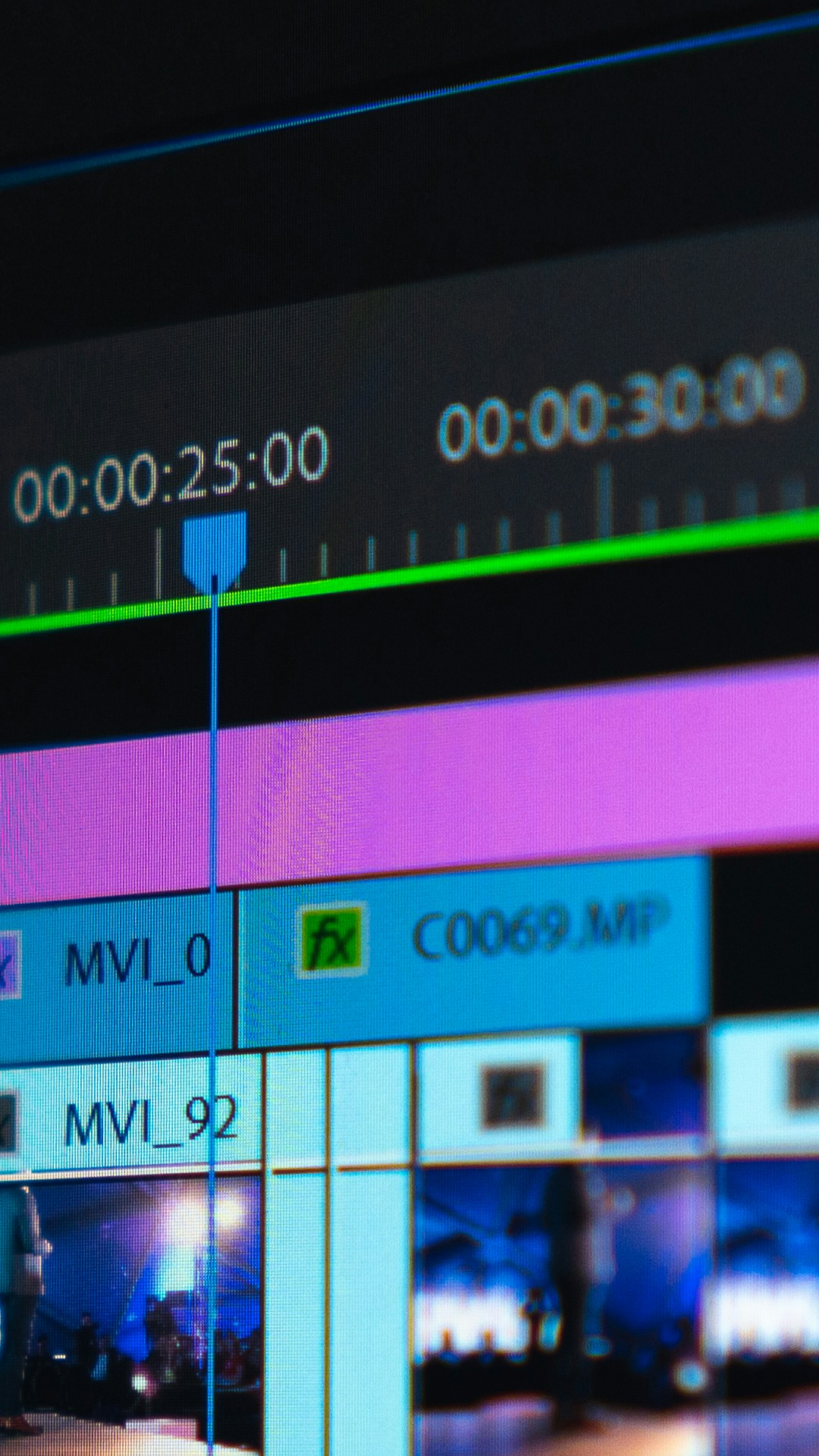
The edit already has rhythm before music arrives
A scene does not need music to have musical properties.
Cuts establish repetition, acceleration, interruption and release. Shot lengths create expectation. Performance establishes phrasing. Dialogue produces rhythm through speech, pauses and silence. Camera movement can create pulse before an editor has made a single cut.
Walter Murch famously places emotion, story and rhythm at the top of his criteria for an edit. He describes rhythm as the “music of the cut”: the sense that a new image needs to arrive at precisely the right moment, much like an instrumental entrance in music.
That is important for composers to understand. The score does not arrive in empty time. It arrives in time that has already been shaped.
This connects directly to a principle we explored in “Tempo, rhythm, time – the foundation of film music, before harmony and themes“: film music does not begin with notes. It begins with time.
But there is an important consequence on the other side of the editing desk:Every decision about picture rhythm also changes the musical possibilities of a scene.

Cutting to music: the easy case
Sometimes cutting to music is exactly what the film requires.
A music video is the obvious example. The music is not temporary scaffolding underneath the edit. It is the object around which much of the visual structure exists.
The same can be true of concert films, performance sequences, dance, musical numbers or scenes shot to playback.
In these cases, music may already have influenced the idea, the shoot and the editorial plan.
And when it is the actual music that will remain in the finished film, cutting to it can produce an extraordinarily tight relationship between image and sound.
Hitchcock described doing essentially this while making Waltzes from Vienna. For a major musical sequence, he adjusted the pace of the cutting to the rhythm and changing speed of the music. Elsewhere, visual actions were conceived to move with music forming in a character’s mind.
Nothing problematic about that. Quite the opposite: Cutting to music works beautifully when the music you cut to is actually the music of the film. Things become much more complicated when it isn’t.

Cutting to temporary music is not the same thing
Put a piece of temp music underneath a scene and something happens almost immediately. The music starts making decisions. Perhaps there is a crescendo at 01:12. A pause at 01:24. A percussion hit at 01:37. A harmonic release at 01:48. And because these things work so well, the edit slowly begins responding to them:A look stays a little longer. A cut moves slightly earlier. A montage gains another shot so that it reaches the build. A scene ends exactly where the temp track resolves. None of those decisions is necessarily wrong.
The problem is more fundamental: The edit is adapting itself to something that is supposed to disappear.
At that point, temporary music is no longer entirely temporary. It has become part of the architecture of the scene.
Professional music editors have been discussing this problem for decades. Digital editing made it possible to manipulate temp music with extraordinary precision – changing tempo and pitch, combining cues from different sources and fitting existing music very tightly to picture. That can make a temp exceptionally convincing. It can also raise the expectation that an original composer should reproduce not merely its function, but the exact experience the edit has gradually been built around.
This is where the familiar phenomenon of temp love begins.
But I think “temp love” sometimes describes the problem too narrowly. It sounds psychological:The director fell in love with a piece of music. Often the problem is structural.
The film fell in love with it too.
The earlier music is in the edit, the earlier music is in the edit
There is a common argument for involving music as early as possible. I broadly agree with it and it really helped on some projects. But “early” is not automatically “better”.
The earlier music is in the edit, the earlier music is in the edit.
Nothing more. If it is the wrong music, the film simply starts responding to the wrong information earlier.
The more interesting principle is:
The earlier the right music is in the edit, the earlier the film may find its right rhythm.
And “right music” does not necessarily mean a finished orchestral score. It could be a sketch. A harmonic idea. A pulse. A rough thematic fragment. A deliberately incomplete texture. Something that communicates the intended musical function without pretending to be a finished cue.
There is an enormous difference between using music to explore what a scene could become and using a highly polished piece from another film as a structure the scene must eventually preserve. Temp music can be a useful prototype. The danger begins when the prototype silently becomes the specification.

Music to cut – or music to a locked cut?
The traditional scoring workflow reverses the relationship. The picture is edited first. Eventually there is a picture lock. The composer receives a stable film and writes music to its timing.
There are good reasons for this. Once sound editorial, dialogue, ADR, VFX, color, music and final mixing are all working against a film, continuously changing duration becomes very expensive very quickly.
Picture lock is not arbitrary bureaucracy. It protects downstream work. It also allows the composer to score with precision. But there is a creative price. Once picture is genuinely locked, the temporal architecture of the score is largely predetermined.
Perhaps the cue has 47 seconds. Perhaps an emotional turn happens at 00:31. Perhaps dialogue occupies most of the first twenty seconds. Perhaps the scene requires the music to disappear precisely before the final line. These are not simply technical restrictions. They become compositional facts.
And sometimes tiny picture changes have surprisingly large musical consequences. A change of twelve frames at 24 frames per second is only half a second. Visually, that may be almost nothing. Musically, it can be enormous. Perhaps a thematic phrase no longer reaches its destination. Perhaps a harmonic change arrives before the cut it was designed to support.
Perhaps the crescendo has to become unnaturally steep. Or perhaps the cue technically still fits but no longer breathes.
There are few things more frustrating in scoring than having a cue – sometimes even an approved cue built around an approved principal theme – and then discovering that the picture has changed just enough to break its internal timing.
From the editing side, the change may be tiny. From the musical side, it can mean rebuilding the cue. Time and money disappear remarkably quickly in those twelve frames.

Picture lock is a production necessity, not an artistic law
This distinction matters. Picture lock solves an enormous production problem. It does not prove that picture and music have already found their ideal relationship. Those are different claims. And I think filmmaking occasionally confuses them.
Once the picture is locked, there is an understandable tendency to regard it as the fixed object and music as the flexible material that must now fit around it. Usually, that is exactly what needs to happen. The composer is one department inside a much larger production. Music cannot demand that hundreds of completed decisions remain permanently negotiable. But there are moments when the music reveals something about the scene. Perhaps a transition wants to happen slightly later. Perhaps a look suddenly becomes much more powerful if it has another eight frames. Perhaps a thematic arrival works perfectly – just not against the current cut. Then an interesting question appears:
If changing three frames makes both the picture and the music better, why should only the music be allowed to change?
We have occasionally had the good fortune to work on projects where an editor or director did exactly that. Music arrived. Something clicked. And picture moved. Not because the composer “won”. Because the film did. 😉

Why that becomes difficult very quickly
Of course, on a large production, moving three frames can be much more complicated than moving three frames.
The image may already affect: VFX. Sound editorial. ADR. Conform. Color. Subtitles. Localization. Approvals. Deliverables.
Someone has to decide whether the improvement justifies reopening all of that. Often it does not. That is reality. But it leads to a useful conclusion:
If picture and music should still be able to influence each other, that conversation has to happen before changing either becomes prohibitively expensive.
Early collaboration is therefore valuable not because composers need more time to compose. They usually do. But that is almost the boring reason. The more interesting reason is that early collaboration preserves optionality.
There is still a moment when picture can react to music and music can react to picture. Once everything is locked, only one side of that conversation remains mobile.

Music needs room
There is another practical issue here. Not all music requires the same amount of temporal space. A texture is extraordinarily flexible: It can enter, develop, change density, and disappear. That flexibility is one reason textural scoring works so well in contemporary film and television.
And there is nothing wrong with textures. Films such as Arrival and Dune demonstrate how profoundly texture, harmony and timbre can shape a film without relying on traditional melodic writing.
But if you want music to do something else – particularly if you want it to carry a recognisable theme – it needs room.
A theme needs to become identifiable: It may need a beginning, a phrase, development, and a destination. Perhaps even silence afterwards.
You can cut five seconds out of many textures without fundamentally changing their identity. Take five seconds out of the wrong place in a melody and you may no longer have the same musical sentence.
That is something editors and directors can influence long before the composer starts writing. If a film wants memorable thematic music but never gives music enough uninterrupted time to articulate an idea, there is a contradiction built into the brief.
You rarely leave the cinema humming a texture. That does not make the texture inferior. It simply means that different musical functions require different amounts and shapes of time.

So who should control the rhythm?
There is no universal hierarchy. Instead there are at least four legitimate models:
- A film can cut to final music. When music is structurally integral and already known, this can produce an extraordinarily unified audiovisual result.
- A film can cut to temporary music. This can be extremely useful for exploration, pacing, screenings and communication – provided everyone remembers which properties of the temp matter and which are accidental.
- A composer can write to locked picture. This is efficient, precise and often unavoidable. It also means accepting the existing temporal structure as a compositional constraint.
- Or picture and music can develop together, with each allowed to affect the other while the production still has enough flexibility to accommodate it.
The fourth model is not automatically superior. It is simply the one with the greatest potential for genuine interaction – and the highest organizational cost.
Walter Murch has described deliberately avoiding cutting scenes to music because it can confuse the underlying dramatic problem. He prefers to make the scene work first on its own visual and dramatic terms, discovering something “musical” in the scene itself; paradoxically, he says, the longer he waits before adding music, the better the eventual music tends to fit.
That seems like an excellent counterweight to the idea that getting music into an edit as quickly as possible must always be progress. Sometimes music reveals the rhythm. Sometimes it hides the fact that the rhythm is not there yet.

Keep the function, lose the temp
Perhaps the most useful question when replacing temp music is therefore not: What do we like about this track?
It is: What is this track doing to the film?
Is it establishing tempo? Holding tension? Creating forward movement?
Providing a point of view?
Bridging two scenes? Making an ellipsis feel natural? Giving a montage structure? Creating one crucial release?
Making silence afterwards more powerful?
These are transferable functions. The particular melody, harmony, orchestration and production of the temp track may not be.
A good transition from temp to original score therefore requires some reverse engineering: Keep the function. Lose the track. That gives the composer somewhere to go. And it allows the film to acquire a musical identity of its own.
Editing and scoring are not consecutive processes

Conclusion
TL;DR: Performance, shot duration, cuts, movement, dialogue and silence create a temporal structure of their own. Cutting to temporary music is fundamentally different because the edit may adapt itself to something designed to disappear. Temp music is not neutral. Once cuts, pauses and transitions begin responding to it, the temp becomes part of the architecture of the scene. The useful goal is not getting music into the edit quickly, but getting the right musical information into the process while decisions can still change. A locked picture gives music stability while simultaneously fixing most of its temporal possibilities. Frames that seem negligible visually can affect phrases, harmonic turns, thematic arrivals and cue structure. If a small editorial adjustment makes the complete audiovisual result better, the fact that music arrived later does not make that adjustment artistically illegitimate. Texture is flexible; thematic writing often needs enough time to establish, develop and resolve an idea. Keep what it does for the film; lose the temp track itself. The real question is not “cutting to music or music to cut?” It is which element remains flexible, for how long, and whether picture and music ever have a chance to change each other.
- The edit already has rhythm before music arrives
- Cutting to music works best when that music is actually part of the finished film
- Temp music is not neutral
- Earlier music is not automatically better music
- Picture lock is necessary for production, but it is not an artistic law
- Tiny picture changes can create large musical changes
- Music sometimes deserves to change the picture
- Different kinds of music need different kinds of space
- When replacing temp, identify its function rather than reproducing its surface
Contact
JP Composers
Julian Pešek (Einzeluntermehmer)
Südstraße 45
04178 Leipzig
Telefon: +49 171 9101572
Mail: julian@jp-composers.com
